
Easy to Apply Methods to Manage iCloud Storage
When you retain getting an INSUFFICIENT Storage alert on your iPad, or iPhone, then you will need to manage your iCloud options. The manage iCloud storage guide demonstrates how to manage your iCloud storage to remain under the 5GB limit.
Eliminating items from iCloud Storage space & Backup Adjustments allows anyone to back up more often than once device in the 5GB Limit.
Moreover, Web whatsapp | Use whatsapp in a browser properly
When you have both an iPad and an iPhone, and also have fired up iCloud back-up on both devices, then it’s likely that you’ve seen this communication: This iPad can’t be backed up since there is insufficient iCloud storage available. You could manage your storage in settings.
Apple has a 5GB limit for iCloud backup, but it is distributed across all devices making use of your Apple ID. If you buy both an iPhone and iPad, you’ve all of the sudden acquired only 2.5GB per device and you will need to manage iCloud storage. Put in a third iOS device and you’re really out of good luck.
Here, we demonstrate how to manage iCloud storage and back up settings and that means you can stay within the 5GB limit but nonetheless regress to something easier your devices.
INSUFFICIENT Storage
How to manage iCloud Storage space & Back-up settings
If you wish to manage iCloud storage and adjustments and that means you don’t start to see the iCloud storage notifications follow these steps:
- You need to Tap on Setting > General and then Storage & iCloud Back-up.
- Check out Total Storage space under the iCloud proceeding – this will say 5GB.
- Check the Available Storage space, this would be the amount that’s available on your accounts. Keep an email of them as you will have to get a device under this limit down the road.
- Touch on Manage Storage.
You must now start to see the Manage Storage home window.
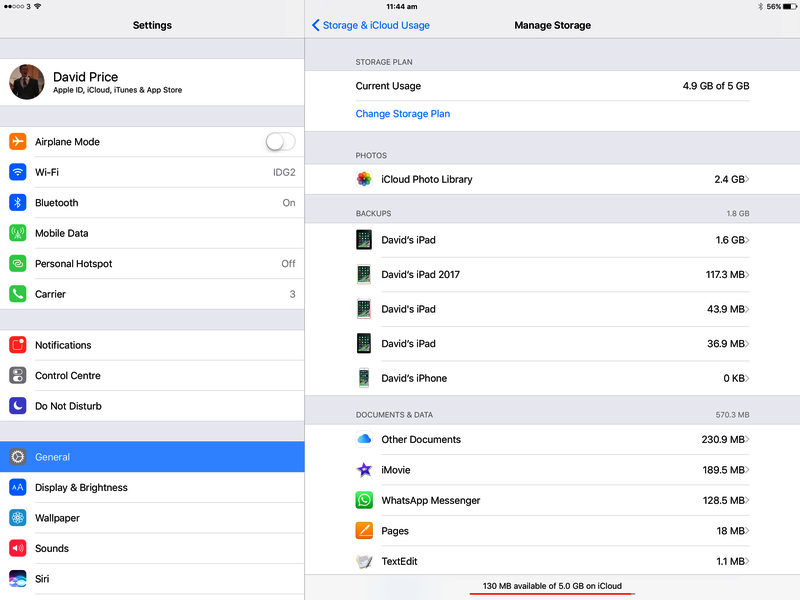
Manage Documents & Data storage in iOS
First, have a look at the Documents & Data storage options. Here you should see all the programs using iCloud. They are taking on space on iCloud with the Documents in the Cloud feature (this permits you to gain access to the same documents on both iPad and iPhone). A few of these you will possibly not need, our iMovie is taking on 56.9MB of data, and we avoid it. Here’s how to eliminate documents and data from software to “manage iCloud storage”.
- Touch the name of the iPhone app in Manage Storage
- Tap Edit
- Touch Delete All and Delete All again
Remember that this removes all the documents you have created in the app, and that means you should put it to use with caution. You must only utilize this unless you really use an software at all. Moreover, if you wish to delete data files from a software individually start the App and manage the data from within it.
How to modify Backup Options
If you’ve removed documents from iCloud and you simply still don’t possess enough room for your back up, you almost certainly need to manage iCloud storage by the backup. Open Storage space and touch on these devices you want to manage under Backups. Also, this will likely display the knowledge window for the device to manage iCloud storage. It will appear to be this:
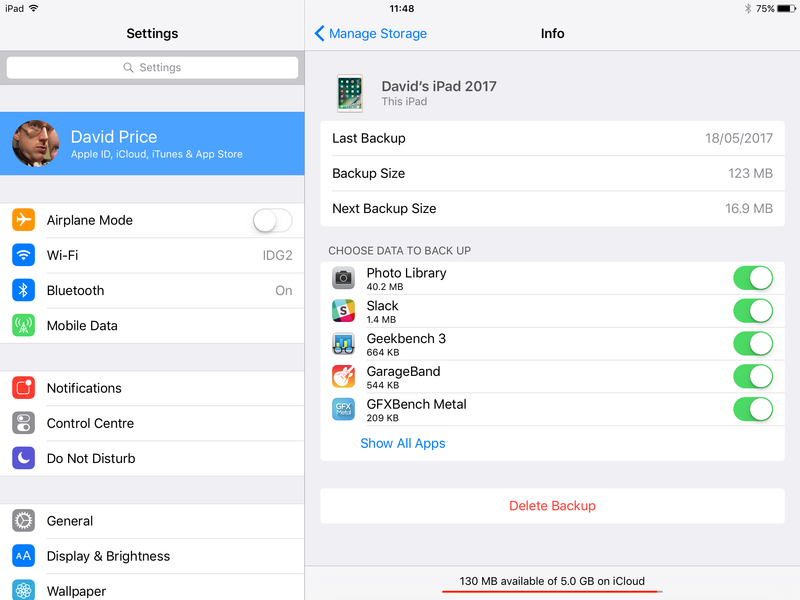
If you turn to the right Next Back up Size, you should observe how much space your device and its own applications will need through to iCloud. However, we can change off the things listed so they don’t really back up to ‘manage iCloud storage’. Follow these steps to release some space:
Look under each software under Backup Options to observe how much space, in MB or GB it is taking on.
- Identify software that uses a great deal of storage, and toggle the move next to the App to Off.
- A SWITCH OFF & Delete windows appears. Touch Delete (don’t be concerned, this doesn’t erase the iPhone app or some of its data from your iPad, it simply deletes any backup data on iCloud).
- Touch Manage Storage.
- Be sure iCloud Backup is defined to On. If not touch On and OK.
- Now Tap Back.
You now realize that you can backup both of your devices, although not absolutely all of this content on both of these. Also, if you’re unwilling to eliminate items from your back-up to squeeze in the 5GB limit, you should touch on Buy More Safe-keeping and have more storage space for Apple. We think it’s somewhat cheeky of Apple to request you to purchase more storage because you’ve bought several devices from them, but that’s a disagreement for a later date.
How exactly to view your iCloud usage
Want to check on and find out what ratio of your iCloud storage space you’ve used? It’s easy.
- Launch the Configurations app on your iPhone or iPad.
- Touch the Apple Identification banner at the very top.
- Touch iCloud. The colored graph at the very top teaches you which types of data are taking on space and exactly how much.

Some Alternative Ways to Manage iCloud Storage
There are a few substitute ways to manage iCloud storage.
Check your space
To observe how much space you are employing, enter Options on your iPhone or iPad, go to iCloud, and click Storage area, accompanied by Manage Storage.
Delete old backups
There’s a good chance that your backups are taking on almost all of your space. When you have backups from your old device, say from an Apple iPhone 4 4 or iPad 2 that so long as own, you can just go right ahead and erase those to manage iCloud storage. Just click on the backup scroll to underneath and faucet Delete Backup.
Change back up settings
You may even be burning items that you do not should have kept in the cloud. For me personally, which includes Safari data (I take advantage of Google Stainless instead) and Connections (I save my connections to Gmail), but it’s different for everybody. Head to Environment and select iCloud. From here you can choose which items you want to be preserved to iCloud. If you discover something you truly don’t value, flip the change off to erase the data also to manage iCloud storage. This will likely also make sure it is not backed up next time you execute a backup.
Alternative image services
A good way to manage iCloud storage is to erase photographs from your backups. Rather than having photographs stored in iCloud, I would recommend using one of the numerous third-party cloud services manage iCloud storage. They feature even more free space than Apple. The best is Google Images, which offers endless storage free of charge. There is also Yahoo’s Flickr app, Microsoft One Drive, DropBox, and Amazon Cloud Drive.